The 8 Theories
I have a major stakeholder in regional environmental issues in We Energies. A powerful and controversial piece of legislation in the Clean Power Plan, and a voluntary network with big goals but no authority to get them there. Where do they fall within Evans final observations?
These are my thoughts and observations, an in no way are they meant to be objective.
Theory 1 Networks and markets are the best thing we have.
I think relying on market based governance and volunteer markets is a quick way to bring us to environmental catastrophe. We already know that companies who pollute will do the absolute bare minimum (with few exceptions) to meet environmental laws. When we allow We Energies greater leverage, they will use it to create more profits at the expense of the environment. It seems volunteer networks have some use, at least by bringing different stakeholders to the table, but are ineffective at exacting rel change, without the help of policy like the CPP.
Theory 2 Governance is about evolution, not revolution.
I like this idea, but some actors are so powerful, like We Energies, they can bully both local and national stakeholders. Otherwise the idea of appropriate levels of governance, according to scale, makes sense. This theory assumes that meta governance will always evolve slower or that the lower orders will be effected by it at a constant rate. With a changing world that is beginning to see increasingly larger environmental catastrophes, its hard to be rigid in finding the appropriate scale of government to deal with environmental issues. We have to be more flexible than that.
Theory 3 Getting the mix of approaches right is critical.
I think this theory works when you look at the full scope of environmental problems we have world wide. A one size fits all solution is impossible. We Energies does not need a myriad of solutions though. It needs clearly defined top down regulation and it needs to be enforced. Not every problem needs that. The CPP is one such piece of legislation attempting to do that. Wisconsin Partners for Clean Air is a different and largely ineffective approach.
Theory 4 Governance requires political vision
Unfortunately, this theory has been mostly successful in creating bad scenarios for our environment. Political leadership and corporate controlled media have partnered with large polluters and turned the general public against environmental stewardship. How many people even know about the Wisconsin Partners for Clean Air? I would wager not as many as there are people that have seen a pro Brad Schimel (WI Attorney General) ad using fear-mongering to manufacture support for his lawsuit against the CPP for the benefit of WE Energies. It is effective in creating support for the environment as well, and there will be a tipping point for global warming acceptance.
Theory 5 Governance is about learning
"The success of governance depends on the ability to adapt to changing contexts through a process of learning". I would attribute both the WPCA and the CPP to this idea. Networks were created as an idea to bring actors together, pool resources, share responsibilities, etc.. The top down hierarchical governance evolved into networks through experience and learning. We also learned the shortcomings of voluntary governance, thus the need for legislation like the CPP.
Theory 6 Duality of structure is critical
I think the CPP is a piece of legislation that allows small scale freedom to get to a common goal. We live in a capitalist society, and although I would prefer our utilities to be nationalized, since they are not, we must allow them room to come up with a cost effective way to meet emissions goals. The companies would prefer a network without enforcement capabilities, but usually get a mix of both. Participation within networks like WPCA seems to help them fall inline with regulatory bodies like the EPA.
Theory 7 Governments matter.
"Governments shape markets" Evans states the not so obvious. There is no such thing as a free market because it is always set by the government. The invisible hand of the market that so many market based environmentalists think can help solve problems, is really controlled by government policy. This is my favorite theory. Actors like WE Energies need a strong government with clear policy. Otherwise, they'll do as capitalists do. I agree that networks have a place, like the WPCA, but those are mostly just to get all the actors around the table. It's direct government action that can have the most impact at the meta level, and even below that as well, depending on the circumstance. I think federal environmental laws are at their best when they coerce states into following them. States are so full of anti-environmental cronyism!
Theory 8 Hybrid institutions are critical in coordinating action across sectors.
I think these are important for disseminating policy across actors and governments. This is one way in which I think networks find their niche. I think without the help of these institutions, we have no CPP.
I still think we need an evolved hierarchic form of governance. Giving companies some freedom is good, but we need gentle reminders to keep moving forward until the problem of global warming is solved. This won't happen without regulatory power. The political vision and political economy need also to be there as well to enact stricter governance, which I feel is why polluters have fought so hard to gain public support of a more relaxed regulatory environment.
Wednesday, December 2, 2015

Sutheastern Wisconsin Clean Air network

The Wisconsin Partners for Clean Air was created in 1996, when the EPA alerted Wisconsin that the six county region in South-Eastern Wisconsin was found to have dangerously high ground level ozone levels.
http://www.cleanairwisconsin.org/businesses/aboutus.phpconditions.
This is a voluntary network of businesses, community organizations, government agencies, and schools that steer a committee which attempts to find simple and cost effective ideas to reduce emissions among its member organizations. Along with that, an educational component exists, to pass on useful information to the general public about ways to reduce emissions.
This is an all volunteer organization, but one with lofty objectives:
- Community leadership will be visibly supportive and personally engaged
- There will be a true and equal partnership between government, businesses, and citizens
- There will be sufficient resources to get the job done
- The economic and health benefits of clean air will be quantified and communicated clearly
- Voluntary emission reductions will be substituted for specific mandatory control measures to meet a portion of the requirements of the Clean Air Act
- There will be significant broad-based public support and an understanding of the various roles of all stakeholders in achieving clean air
- There will be a widely held belief that control of our own destiny through voluntary efforts is limitless in terms of what can be achieved
- There will be a close and collaborative relationship with the media to enable effective communications
- The youth of today will be involved to protect the air of today as well as tomorrow
- Travel alternatives will be strongly supported and widely used
- There will be learning resources to enable industry sharing of technical ideas
- These voluntary efforts will challenge other regions to improve air quality
- There is a vision and there are clear goals and annual recognition of success; focus and efforts will be renewed annually
The steering committee consists of these businesses and organizations:
| American Lung Association of Wisconsin | City of Milwaukee Health Department |
| Fight Asthma Milwaukee Allies | General Mitchell International Airport |
| In-Sink-Erator DIV Emerson Electric | Godfrey & Kahn, S.C. |
| Milwaukee County Transit System | Metropolitan Milwaukee Association of Commerce |
| Quad/Graphics, Inc. | Milwaukee Journal Sentinel |
| Southeastern Wisconsin Regional Planning Commission | University of Wisconsin-Milwaukee |
| WE Energies | Wisconsin Department of Natural Resources |
| Wisconsin Department of Transportation | Wisconsin Manufacturers and Commerce |
| Wisconsin Clean Cities - SE Area, Inc. |
With that set of objectives and organizations that would be directly opposed to one another, what can we expect from this organization, that holds no political authority?
Evans writes on page 119 that motivation to join these organizations is only for pure self interest. Why would WE Energies bother with an organization like this, considering the pro pollution (business) climate that exists in Wisconsin? The Fight Asthma Allies, what can they possibly gain over such powerful and well funded organizations like the MMAC? WE Energies gets to showcase its corporate responsibility, and the Fight Asthma Milwaukee Allies gets valuable input to help influence WE Energies self regulation. I mention these two because a prior post of mine mentioned a lawsuit both of these organizations were involved in.
Evans writes that "The most common criticism of CSR is that companies will engage in order to improve their image, without stopping profitable but environmentally damaging activities". This would be called "greenwashing" and of some of these companies are extremely guilty of it.
I believe WPFCA is an organization that would fall under the CSA model of network governance.
I have a hard time finding what this organization actually asks of major polluters on its website. It does list simple ideas we can personally employ in our day to day lives to reduce emissions. Although useful, it does seem to push responsibility to individual consumers, which is odd, considering the massive amounts of pollution coming from some of the steering committee members. It seems like a greenwash, with many valid criticisms coming right from the Evans chapter on networks. Offering rideshare incentives are nice, but ineffective for real change in emissions.
The strengths I do see with this network is that it does broaden participation among actors. Even WE energies has to follow government regulation, and when it does, it can be useful to have community actors give input.
It is also important to note that this organization is just one part of the state governments fight for cleaner air. It seems like this is the "ask nicely" part of its actions to regulate polluters. Everyone knows that it is poor form when seeking change, to not ask nicely first. So I feel it does have an important spot to fill.
Tuesday, December 1, 2015
Final Thoughts
 I discussed a variety of actors, initiatives/regulations relating to air pollution and improvement on air quality. It ultimately comes down to the various types of governance discussed in lecture and which one is most effective. Like in the Valerie's post, all of these actors, initiatives/regulations and various forms of governance have their strengths ,but they also have their weaknesses.
Trying to assess Clean Wisconsin, this NGO has done substantial efforts in improving Wisconsin's atmosphere especially in terms of legislative action. The EPA, WI DNR, and WI Department of Transportation (in terms of emissions standards and testing) also have a very top-down traditional approach in terms of setting regulations for the country and the state. Whereas in my last post, the Wisconsin Clean Transportation Program including Wisconsin Clean Cities, Wisconsin State Energy Office and many other partners was more of a collaborative, network approach.
Looking at various forms of governance when trying to improve air quality has given me an interesting point of view. We cannot forget about the forms that I nor my peers did not touch on.
The easiest way is to look at some of the hypothesis discussed by J.P Evans. Trying not to overlap too much, the first one I think is important is networks and markets are the best things we have. Networks are flexible and don't require a usual framework to operate in ,and markets do have a usual framework and can promote more supply & demand approaches like cap and trade. Evan says, "Although networks have been criticized for their voluntary basis, and markets for exacerbating existing inequalities, they are the best things that we currently have, so we should work with them" (215). The WCTP initiative is a perfect example of a network based approach in dealing with issues on air quality. I think more network based initiatives (more permanent ones) should be implemented throughout the state(s). especially due to the success of WCTP.
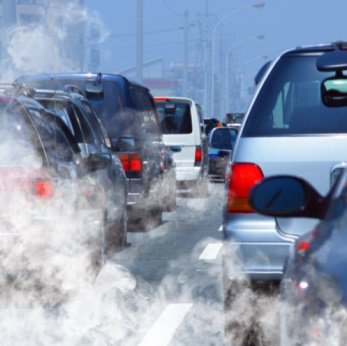
In terms of the emissions standards and testing, governance requires political action and governments matters hypotheses are crucial to consider. Having governance steer society in the right direction and implementing broad goals is a good start. EPA has started to do with emission standards even though their are wide variety of limitations to emissions testings across the states from cheating, loop holes in the regulations to some would say being completely inefficient. It is a pushing industries/companies, citizens, and society as a whole into the right direction of being aware of the emissions we put into the air and trying to regulate them. This leads to governments being important because it helps shape the structure. With the limitation of them being under-resourced, it can help by bringing together more partnerships and networks to achieve wide variety of strategic goals like improving air quality.
The last two hypotheses I would like to touch on are governance is about learning and getting the mix of approaches is critical. A successful governance is about having the ability to adapt to changing contexts through a process of learning, and I think we are learning that incorporating a diversity of approaches is the best way to such complex issues especially dealing with air quality regulations and overall improving our air quality. Its crucial to incorporate the different forms of governance (hierarchical, network, market, transition, adaptive) for it is beneficial and necessary.
Something that Evans states sums everything up, "Governance has the potential to link people, places and things together in radical new ways...Breaking with the existing status quo requires diversity, open-mindedness and the capacity to learn and change. In doing these things, governance can help forge new identities and visions for the world in which we want to live in" (219).
All these hypotheses presented apply to our issue of air quality, the actors and initiatives/regulations, and the forms of governance itself presented earlier have many strengths. Weaknesses mostly include rigidity for hierarchical and voluntary basis for network. I think it should be widely considered to incorporate more of transition and adaptive governance approaches to our problem of air quality. Especially, creating more laws and initiatives that have high rates of resilience.
Sources:
-Evans, J.P. Environmental Governance. New York: Routledge, 2012. Print.
-Images: Google
Subscribe to:
Comments (Atom)