 I discussed a variety of actors, initiatives/regulations relating to air pollution and improvement on air quality. It ultimately comes down to the various types of governance discussed in lecture and which one is most effective. Like in the Valerie's post, all of these actors, initiatives/regulations and various forms of governance have their strengths ,but they also have their weaknesses.
Trying to assess Clean Wisconsin, this NGO has done substantial efforts in improving Wisconsin's atmosphere especially in terms of legislative action. The EPA, WI DNR, and WI Department of Transportation (in terms of emissions standards and testing) also have a very top-down traditional approach in terms of setting regulations for the country and the state. Whereas in my last post, the Wisconsin Clean Transportation Program including Wisconsin Clean Cities, Wisconsin State Energy Office and many other partners was more of a collaborative, network approach.
Looking at various forms of governance when trying to improve air quality has given me an interesting point of view. We cannot forget about the forms that I nor my peers did not touch on.
The easiest way is to look at some of the hypothesis discussed by J.P Evans. Trying not to overlap too much, the first one I think is important is networks and markets are the best things we have. Networks are flexible and don't require a usual framework to operate in ,and markets do have a usual framework and can promote more supply & demand approaches like cap and trade. Evan says, "Although networks have been criticized for their voluntary basis, and markets for exacerbating existing inequalities, they are the best things that we currently have, so we should work with them" (215). The WCTP initiative is a perfect example of a network based approach in dealing with issues on air quality. I think more network based initiatives (more permanent ones) should be implemented throughout the state(s). especially due to the success of WCTP.
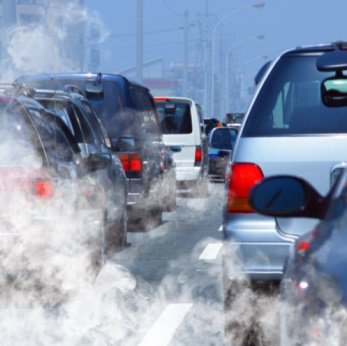
In terms of the emissions standards and testing, governance requires political action and governments matters hypotheses are crucial to consider. Having governance steer society in the right direction and implementing broad goals is a good start. EPA has started to do with emission standards even though their are wide variety of limitations to emissions testings across the states from cheating, loop holes in the regulations to some would say being completely inefficient. It is a pushing industries/companies, citizens, and society as a whole into the right direction of being aware of the emissions we put into the air and trying to regulate them. This leads to governments being important because it helps shape the structure. With the limitation of them being under-resourced, it can help by bringing together more partnerships and networks to achieve wide variety of strategic goals like improving air quality.
The last two hypotheses I would like to touch on are governance is about learning and getting the mix of approaches is critical. A successful governance is about having the ability to adapt to changing contexts through a process of learning, and I think we are learning that incorporating a diversity of approaches is the best way to such complex issues especially dealing with air quality regulations and overall improving our air quality. Its crucial to incorporate the different forms of governance (hierarchical, network, market, transition, adaptive) for it is beneficial and necessary.
Something that Evans states sums everything up, "Governance has the potential to link people, places and things together in radical new ways...Breaking with the existing status quo requires diversity, open-mindedness and the capacity to learn and change. In doing these things, governance can help forge new identities and visions for the world in which we want to live in" (219).
All these hypotheses presented apply to our issue of air quality, the actors and initiatives/regulations, and the forms of governance itself presented earlier have many strengths. Weaknesses mostly include rigidity for hierarchical and voluntary basis for network. I think it should be widely considered to incorporate more of transition and adaptive governance approaches to our problem of air quality. Especially, creating more laws and initiatives that have high rates of resilience.
Sources:
-Evans, J.P. Environmental Governance. New York: Routledge, 2012. Print.
-Images: Google

No comments:
Post a Comment